
The complete offshore investment bond guide. Updated for 2026/27 tax year
This guide is designed for UK residents, expatriates, business owners and internationally connected families seeking to better understand how offshore investment bonds work in practice.
What is an offshore investment bond?
An offshore investment bond, also referred to as an international portfolio bond, is a tax-efficient wrapper that lets you invest a lump sum — typically £250,000 or more — in a wide range of investment funds (could be UK, EU or international) without incurring annual UK tax on growth or capital gains on fund sales. Your investment compounds without any tax drag until you choose to draw from your offshore bond beyond an annual 5% allowance. This is called gross roll-up.
Offshore bonds are issued by life assurance companies based in jurisdictions such as the Isle of Man, Ireland, or Guernsey, and are thus outside of the UK tax net during the accumulation phase. When you take money out (beyond the annual 5% accumulated allowance), a tax event is triggered, but by that point you may be in a lower tax bracket, or able to use relief mechanisms to significantly reduce the bill. You may have also gifted underlying sub-policies to other family members, which is not a chargeable event.
For UK residents and families, UK expats, returning residents, and internationally mobile professionals, offshore investment bonds can be one of the most powerful long-term wealth structures available. All well and good, however offshore investment bonds are considerably more complex than a simple General Investment Account, and therefore the wrong structure, or a poorly advised withdrawal, can be potentially costly and tax inefficient. That is why specialised, independent advice matters. I have advised on the use of offshore investment bonds for more than 20 years and have become highly specialised in how they can be used within wider wealth planning and succession strategies.
| Feature | Offshore Bond | ISA | GIA | Pension |
|---|---|---|---|---|
| Tax on growth | Deferred gross roll-up | None — tax-free | Income tax + CGT annually | Deferred |
| Annual limit | No limit | £20,000 | No limit | Up to £60,000 |
| Tax-free access | 5% p/a tax on gain deferred | Fully tax-free | Fully taxable | 25% lump sum |
| Estate planning | Trust structures available & Segmentation | Limited | Potentially taxable | Death benefits only |
| Minimum | ~£250,000+ | £1 | £1 | £1 |
Key Benefits of Offshore Investment Bonds.
Tax-deferred growth
No annual UK tax on investment growth and capital gains when assets are bought and sold while the bond is held. Unlike a direct investment, where income and gains are assessed each tax year, the bond grows on a gross roll-up basis, meaning no income tax or capital gains tax is deducted as the underlying funds grow. The tax position is deferred until you choose to draw from it, giving your wealth the full compounding benefit in the meantime. This tax-deferred growth can have a significant impact on long-term return as the tax that would have otherwise been paid, on the annual gains, remains within the bond to generate further investment return.
5% Withdrawal Allowance
Each policy year that the bond is in force, you can withdraw up to 5% of your original investment without triggering an immediate tax charge. Unused allowances accumulate, so as an example, if you have not made withdrawals for the first five years, you could take 25% of the original investment value, in a single year with no immediate liability. This represents a deferred tax position, not an exemption, but the cashflow flexibility, and the value of having this money (that would otherwise be paid in tax remain invested) creates one of the most practical advantages of the structure.
Estate planning efficiency
Offshore bonds can sit outside your estate for IHT purposes when written into an appropriate trust structure, allowing controlled, tax-efficient succession to beneficiaries. A very popular estate planning strategy for offshore bonds is to assign segments to other family members, often children. Thus, the bond can be divided into individual segments and assigned to family members in lower tax bands without triggering a chargeable event, a level of flexibility that direct investments simply cannot replicate. Structured correctly, offshore bonds offer one of the most effective tools available for intergenerational wealth transfer.
Top-Slicing Relief
When a chargeable gain arises, you don’t pay tax on the whole gain at once. A calculation is made called top-slicing relief, which spreads the gain across the years that the bond has been held, which can serve to bring the effective tax rate down on the gain significantly. In many situations that can mean that higher-rate tax liability is eliminated altogether.
It is one of the most misunderstood reliefs in the tax system.
UK HNW residents looking to reduce tax on their investments and/or retirement income
Business owners seeking tax-deferred growth on their investments
UK expats wishing to structure their investments tax efficiently while non-UK resident
UK HNW residents & their families looking to pass wealth on in a simple and tax-efficient manner
Frequently asked Offshore Bond Questions
Straight answers to the questions clients ask about offshore bonds most often.
Understanding Offshore Bonds
An offshore investment bond is a life assurance policy issued by a company outside the UK (typically Isle of Man, Ireland, or Guernsey) that holds investments on your behalf. The key tax advantage is gross roll-up: investments grow without annual UK tax on income or capital gains until you take money out beyond an annual 5% allowance. They are typically used as long-term, tax-efficient wrappers for lump sums of £250,000 or more (although they can be set up with as little as £50,000).
Both Offshore and Onshore Investment Bonds are life assurance-based investment wrappers and share many structural similarities. Both can provide tax deferral, flexible investment management and long-term planning opportunities.
The key difference is primarily where the bond is issued and how taxation is applied within the structure itself.
With an Onshore Investment Bond, the underlying life company pays UK corporation tax internally on investment gains and income within the fund. As a result, basic rate tax is treated as having effectively already been paid within the bond.
By contrast, an Offshore Investment Bond is usually issued from an international financial centre such as the Isle of Man, Dublin or Luxembourg. The underlying investments grow largely free from UK income tax and capital gains tax within the bond itself, often referred to as “gross roll-up”.
This can create greater long-term tax deferral flexibility, particularly for:
• Higher-rate or additional-rate taxpayers
• Internationally mobile individuals
• Retirement income planning
• Intergenerational wealth planning
• Investors seeking greater control over the timing of taxation
Offshore Bonds also often provide broader currency flexibility and, in some cases, access to a wider international investment universe.
Importantly though, Offshore Bonds are not automatically “better” than Onshore Bonds. The most appropriate structure depends on factors such as:
• Current and future tax position
• Residency status
• Investment objectives
• Time horizon
• Withdrawal requirements
• Estate planning considerations
In practice, both structures can be highly effective when used appropriately within wider financial planning.
No, not at all! Offshore investment bonds are fully legal and have been used by UK HNW investors and UK expatriates for many decades. They are HMRC-recognised structures, governed by UK tax legislation (principally ITTOIA 2005). Offshore bonds are not in any way tax avoidance schemes. Offshore bonds are statutory wrappers that defer tax rather than eliminate it. Used correctly, they are a legitimate and efficient way to structure long-term wealth. Russell’s advice is always within the bounds of UK tax law, fee-based, and fully documented.
Most modern Offshore Investment Bonds are issued from well-regulated international financial centres such as:
• Isle of Man (most popular)
• Dublin (Ireland)
• Luxembourg
These jurisdictions have long-established financial services industries and regulatory frameworks designed specifically for international investment and insurance business.
The appropriate jurisdiction will depend on factors such as:
• Country of residence
• Tax position
• Investment objectives
• Currency requirements
• Desired legal protections
• Succession and estate planning considerations
Different jurisdictions may also offer different compensation schemes, regulatory frameworks and investment flexibility.
Offshore Investment Bonds are typically most suitable for individuals and families looking for a tax-efficient, long-term investment structure, particularly where there are wider financial planning, estate planning or international considerations involved.
They are commonly used by:
• UK resident private clients and families
• Business owners and entrepreneurs
• Internationally mobile individuals and expatriates
• UK residents seeking tax deferral and wealth structuring flexibility
• Individuals approaching or in retirement
• Families considering intergenerational wealth planning
• Investors seeking long-term investment growth without annual personal taxation on gains within the bond
They can be particularly effective where clients already hold substantial taxable investments within General Investment Accounts (GIAs) and are looking for greater tax efficiency, reporting simplicity or succession planning flexibility.
The suitability of an Offshore Bond will always depend on an individual’s objectives, tax position, time horizon and wider financial circumstances.
Offshore Investment Bonds are not appropriate for every investor.
For some individuals, simpler and more accessible structures such as ISAs, pensions or standard investment accounts may be more suitable, particularly where investment amounts are smaller or where tax allowances are unlikely to be fully utilised.
They may also be less suitable for:
• Investors with very short-term investment horizons
• Individuals requiring unrestricted access to all capital in the near future
• Clients uncomfortable with investment risk
• Individuals seeking highly speculative trading arrangements
• Clients whose tax position means little or no planning advantage would be achieved
As with any financial planning structure, the value lies not in the product itself, but in whether it appropriately aligns with the client’s overall objectives and circumstances.
No, although they are often particularly attractive for higher-net-worth investors due to the planning flexibility they can provide.
Many Offshore Bonds do have relatively high minimum investment levels compared to mainstream retail investment products, but the suitability of the structure depends far more on the client’s objectives and planning needs than simply their level of wealth.
For some investors, the additional flexibility around tax deferral, estate planning and international structuring can make Offshore Bonds highly valuable.
Yes. Offshore Investment Bonds are often used by internationally mobile individuals and families because of the flexibility they can provide around tax deferral, multi-currency investing and international wealth structuring.
They can be particularly relevant for:
• Individuals relocating to or from the UK
• International executives and business owners
• Families with assets across multiple jurisdictions
• Individuals spending time in multiple countries
• Those considering future changes in tax residence
The suitability of any structure will depend heavily on an individual’s country of residence, future plans, tax position and the rules applicable both now and in the future.
Given the complexity and evolving nature of international tax legislation, specialist advice is essential in this area.
In theory you could, however, most major offshore bond providers (Utmost, Canada Life International, RL360) only accept applications through a qualified, authorised financial adviser due to the complex nature of the offshore bond investment structure. Even where direct access is technically possible, the complexity of structuring, trust arrangements, and withdrawal planning means doing this without advice carries significant risk of an unexpected and avoidable tax charge. It is therefore advisable that professional, regulated financial advice is sought if you’re looking to set up an offshore bond.
Tax Planning & UK Legislation
The 5% annual withdrawal allowance is the feature of offshore bonds that most bond holders value the most. HMRC allows you to withdraw up to 5% of your original investment each policy year without triggering an immediate tax charge. It doesn’t even go on your Self Assesment tax return. Unused allowances roll forward, so if after, say, 20 years of not making any withdrawals, you could withdraw 100% of the original investment without any immediate tax. This is a powerful income-planning tool, as it means that you can have your offshore bond set up, providing you with an income each year of up to 5%, but without any immediate liability for tax on that withdrawal. Exceeding the cumulative allowance does create a chargeable event, however, thus advice around policy withdrawal options is important in order to best manage this future tax liability.
Offshore Investment Bonds benefit from what is often referred to as “gross roll-up”, meaning the underlying investments can generally grow without ongoing UK income tax or capital gains tax being applied within the bond itself.
Tax is instead normally deferred until a chargeable event occurs, such as:
• Full surrender
• Partial surrender above allowable limits
• Assignment for money or money’s worth
• Death in certain circumstances
For UK residents, gains are generally assessed under UK chargeable event legislation. Depending on the circumstances, reliefs such as top slicing relief may also be available.
Tax treatment will always depend on the investor’s residency, domicile status, tax position and the structure of the withdrawals taken.
Tax rules can change and individual advice is essential.
UK residence triggers UK tax liability on any subsequent chargeable gains. The critical planning window is the period before you become UK-resident again — this is when you can restructure holdings, surrender segments, or assign the bond without the same UK tax consequences. Acting after you return is still possible, but the options are narrower. This is one of the most valuable areas Russell advises on.
Importantly, many of the core planning benefits associated with Offshore Bonds are based not on “loopholes”, but on the long-established taxation framework that applies to life assurance investment bonds under UK legislation.
An Offshore Investment Bond is not simply an investment account held overseas. Legally, it is a life assurance contract issued by an insurance company, with the underlying investments held within that insurance wrapper. It is this long-established life assurance structure that gives rise to many of the tax characteristics associated with investment bonds.
For example, the ability for investments within the bond to grow largely free from ongoing UK income tax and capital gains tax reporting, together with the ability to take cumulative 5% tax-deferred withdrawals, forms part of the established UK chargeable event regime governing investment bonds.
Importantly, this is not some obscure or artificial arrangement. Investment bonds have existed within UK financial planning for decades and remain widely used by UK residents, trustees, business owners and internationally mobile families alike.
Of course, tax legislation can evolve over time and no future treatment can ever be guaranteed. However, the planning characteristics associated with Offshore Bonds are derived from the established legal and tax treatment of life assurance investment contracts rather than from aggressive tax avoidance mechanisms or temporary legislative anomalies.
Yes. Offshore Investment Bonds can be highly effective retirement planning tools, particularly for individuals seeking tax-efficient and flexible access to capital over time.
One of the key advantages is the ability to defer taxation within the bond while allowing the underlying investments to continue growing largely free from annual income tax and capital gains tax reporting.
For many investors, this can provide flexibility around:
• Timing of withdrawals
• Managing taxable income in retirement
• Sequencing withdrawals alongside pensions and ISAs
• Deferring tax to lower-income years
• Long-term investment compounding
Offshore Bonds can also work well alongside broader retirement strategies involving pensions, SIPPs, ISAs and cash reserves.
The most appropriate structure will depend on factors such as age, tax residency, income requirements and long-term objectives.
Investment Choice & Flexibility
Modern Offshore Investment Bonds can offer an extremely broad range of investment options, often comparable to what would be available within a General Investment Account (GIA), SIPP or ISA.
Today’s Offshore Investment Bonds are sophisticated investment wrappers capable of accommodating a very broad range of investment strategies and asset classes. The underlying investments may be UK domiciled, EU domiciled or international depending on the provider, platform and client requirements.
This can include:
• Global equity funds
• Government and corporate bond funds
• Fixed income portfolios
• Multi-asset and managed portfolios
• Index funds and ETFs
• Cash and deposit holdings
• Commercial property funds
• Gold and precious metals exposure
• Structured products, where appropriate
• Specialist and alternative investment funds
• In some cases, cryptocurrency-related funds or digital asset exposure
The precise investment range depends on the provider, jurisdiction and adviser permissions involved, but for most clients the available investment universe is extremely broad.
Importantly, the Offshore Bond itself is simply the tax wrapper. The underlying investment strategy can still be built around the client’s objectives, risk tolerance, income requirements and long-term planning needs, just as it would within a conventional investment account.
For clients who wish to incorporate environmental, social and governance (ESG) considerations into their investment strategy, many Offshore Investment Bonds can accommodate a wide range of sustainable and responsible investment solutions.
Depending on the provider and investment platform, this may include:
• ESG-screened investment portfolios
• Sustainable and ethical investment funds
• Climate-focused and low-carbon strategies
• Renewable energy and clean technology funds
• Social impact and thematic investments
• ESG-integrated global equity and bond funds
• Passive and active ESG investment approaches
Many of the world’s largest investment managers now offer dedicated ESG fund ranges, allowing clients to align their investments more closely with their personal values without necessarily compromising diversification or long-term investment discipline.
Importantly, ESG investing is not a single defined style. Some investors simply wish to avoid certain sectors, while others prioritise sustainability themes, carbon reduction, governance standards or measurable social impact.
The appropriate approach should always be considered alongside the client’s broader financial objectives, risk tolerance, investment time horizon and return expectations.
In many cases, yes.
Many Offshore Investment Bonds are designed specifically for internationally mobile and globally connected investors and can accommodate multiple currencies within the same structure.
Depending on the provider, this may include holdings in:
• Sterling (GBP)
• US Dollars (USD)
• Euros (EUR)
• Swiss Francs (CHF)
• Other major international currencies
This flexibility can be useful for investors with international lifestyles, overseas assets, foreign currency liabilities or future spending requirements in different jurisdictions.
Currency exposure should always be considered carefully as part of the wider investment strategy.
Yes, and the offshore bonds that Russell uses have immediate access capability with no lock-ins or minimum investment periods.
Most modern Offshore Investment Bonds are designed to provide flexible access to capital and do not operate like traditional fixed-term investments.
Clients can typically take withdrawals, encash individual segments or fully surrender the bond if required, although tax consequences and provider terms will need to be considered carefully.
Certain older or legacy products may still contain exit penalties or restrictions (particularly those that have been sold outside of the UK by non UK regulated advisers), which is why understanding the specific provider terms is important.
Yes, you can.
Many Offshore Investment Bonds allow additional contributions to be added over time, subject to provider terms and minimum investment levels.
This can be useful where clients:
• Receive bonuses or business sale proceeds
• Dispose of other investments
• Wish to phase additional capital into the structure
• Continue building long-term wealth within the bond
Most Offshore Bond providers offer detailed online valuations, transaction reporting and annual statements.
Depending on the structure involved, clients may receive reporting covering:
• Portfolio valuation
• Investment performance
• Transaction history
• Income and withdrawals
• Asset allocation
• Currency exposure
Many modern providers also offer online access, apps and consolidated reporting functionality.
Russell provides ongoing review and planning support where appropriate as part of an ongoing advisory relationship, which also includes seperate online visibility of his client’s offshore investment bond arrangements.
Inheritance Tax & Family Wealth Planning
When placed into a suitable trust, the value of the bond can be removed from your estate for IHT purposes (subject to the usual seven-year rule for gifts into trust). Offshore bonds work particularly well within discretionary trusts because the trustee can control who benefits and when, without triggering income tax at the trust rate on income retained inside the bond — unlike onshore bonds.
Yes. Offshore Investment Bonds are often used as part of wider family wealth and inheritance planning strategies.
One particularly valuable feature is the ability to divide the bond into individual segments, which can then potentially be assigned to family members or trusts without immediately triggering a taxable disposal in certain circumstances.
This flexibility can help facilitate:
• Gradual wealth transfer during lifetime
• Tax-efficient gifting strategies
• Planning for children and grandchildren
• Family trust arrangements
• Long-term succession planning
For many higher-net-worth families, Offshore Bonds can therefore provide both investment flexibility and practical estate planning functionality within a single structure.
As always, any gifting or inheritance planning strategy should be considered carefully alongside legal and tax advice where appropriate.
Yes. Offshore Investment Bonds are frequently used alongside trust planning arrangements as part of wider estate and inheritance tax planning strategies.
Depending on the client’s objectives, Offshore Bonds may be held personally, jointly or within certain trust structures.
Potential uses can include:
• Estate planning
• Family gifting strategies
• Wealth preservation planning
• Planning for future generations
• Probate efficiency
The interaction between trusts and Offshore Bonds can become highly technical and specialist legal and tax advice may also be required depending on the circumstances involved.
n many circumstances, yes.
One of the distinctive features of Offshore Bonds is the ability to assign individual policy segments to another person, such as an adult child or family member.
Where structured appropriately, this can potentially allow assets to be transferred without immediately triggering a taxable gain at the point of assignment.
This flexibility can be particularly useful for:
• Intergenerational wealth planning
• Family gifting strategies
• Funding property purchases or future family needs
• Managing inheritance tax exposure
• Long-term succession planning
The taxation of any future withdrawals or encashments would then typically be assessed based on the recipient’s own tax position.
As with all tax planning, professional advice is essential before proceeding.
The treatment of an Offshore Investment Bond on death depends on how the bond is owned and structured.
In many cases, the bond can continue for surviving owners or beneficiaries, although tax treatment and estate planning implications will vary depending on the specific circumstances involved.
Offshore Bonds are often used within wider succession planning because they can potentially assist with:
• Probate efficiency
• Estate structuring
• Beneficiary planning
• Segmentation and assignment strategies
• Family wealth transfer planning
Appropriate ownership structuring and beneficiary planning can be extremely important and should be reviewed regularly.
Costs, Safety & Practical Questions
This is one of the most common misconceptions around Offshore Bonds, largely because historically many older-style products carried high charges, long lock-in periods and commission-based structures.
Modern Offshore Bonds are often very different. In many cases, the actual bond wrapper charge can be relatively low, particularly on larger portfolios, with costs typically driven more by the underlying investment strategy and adviser servicing level than the bond itself.
In fact, for higher-net-worth clients, Offshore Bonds can often work out comparably priced, or even lower cost, than equivalent General Investment Account (GIA) structures once platform fees, reporting complexity, CGT administration and underlying investment costs are all considered. Some modern Offshore Bond structures also benefit from institutional-style pricing that is not always available on retail investment platforms.
For many clients, the real value lies not simply in cost, but in the additional planning flexibility the structure can provide. Offshore Bonds can offer significant advantages around tax deferral, withdrawal planning, segment assignments, estate planning and intergenerational wealth transfer, areas where standard taxable portfolios can become considerably more restrictive and administratively cumbersome over time.
That said, not every Offshore Bond is competitive and not every client needs one. Charges, flexibility, tax treatment and provider quality vary significantly between providers and jurisdictions.
The key question is not simply:
“What does it cost?”
But rather:
“What value, flexibility and tax efficiency does the structure provide relative to the alternatives?”
A common concern with Offshore Bonds is whether they offer the same level of protection as UK-based investments. In reality, the position is often far stronger and more structured than many people assume.
Most modern Offshore Bonds are issued by well-capitalised international life assurance companies operating within highly regulated jurisdictions such as the Isle of Man, Dublin or Luxembourg. Client assets are typically held separately from the provider’s own balance sheet and invested into underlying regulated funds, commonly OEICs, unit trusts or institutional investment funds managed by well-known global investment groups.
For example, Isle of Man-based providers are covered by the Isle of Man Life Assurance (Compensation of Policyholders) Regulations, which currently provide protection of up to 90% of the policyholder’s liability with no upper monetary limit, should an authorised insurer fail.
By comparison, UK investments held through standard UK platforms generally fall under the UK Financial Services Compensation Scheme (FSCS), which currently protects eligible investment claims up to certain limits depending on the type of provider and structure involved.
Importantly though, the real protection for most investment structures, whether UK or offshore, is typically the legal ring-fencing and segregation of client assets from the provider’s own corporate assets. In practice, underlying investments are normally held independently of the life company itself rather than sitting directly on the provider’s balance sheet.
Of course, protections, jurisdictions and legal structures differ between providers, so it is important that any Offshore Bond provider is assessed carefully from both a financial strength and regulatory perspective.
Russell typically works with individuals and families investing from approximately £250,000 upwards, although this can vary depending on the nature and complexity of the planning required.
Many clients have significantly larger portfolios, particularly where advice involves pensions, offshore bonds, family wealth structuring or wider intergenerational planning.
There is no formal upper limit. Russell regularly advises high-net-worth and ultra-private clients with multi-million-pound investment portfolios and more complex cross-border or tax-sensitive planning requirements.
Where a case falls outside of the typical minimum level, Russell may still be able to help where there is a particularly strong planning need or future relationship potential.
In many cases, yes.
Russell regularly works with clients who already hold existing Offshore Investment Bonds arranged elsewhere, including older legacy structures, expatriate arrangements and portfolios that may no longer be receiving active advice or ongoing strategic review.
Depending on the provider and jurisdiction involved, it is often possible to transfer the servicing and ongoing advisory relationship without needing to surrender the bond itself. This can allow clients to retain existing tax benefits and structure while receiving updated investment oversight, retirement planning or wealth transfer advice.
Russell also regularly reviews existing Offshore Bonds to assess areas such as:
• Investment suitability and performance
• Cost efficiency
• Tax planning opportunities
• Estate planning flexibility
• Withdrawal strategy
• Segment assignment planning
• Currency exposure and asset allocation
The appropriate route will depend on the existing provider terms, jurisdiction and wider planning objectives.
Russell’s work is entirely fee-based. There is no commission from providers, no product bias and no obligation to implement any recommendations made.
Fees are agreed transparently in advance and depend on the scope, complexity and nature of the work involved. This may include strategic financial planning, investment advice, offshore bond structuring, pension planning or wider wealth transfer work.
An initial 30-minute discovery call is always provided free of charge and without obligation. Where appropriate, a fixed-fee planning engagement or ongoing advisory fee structure will then be discussed and clearly agreed before any work begins.
The objective is simple: clear advice, transparent pricing and long-term alignment with clients.
Real World Offshore Bond Planning Cases

Retirement Income & Tax Planning
John & Sarah
Recently retired, multiple pensions and ISAs, seeking tax-efficient income
Key features used: 5% cumulative tax-deferred withdrawals · Gross roll-up · Coordinated income across pensions, ISAs and bond
John and Sarah, both recently retired, had accumulated a combination of pensions, ISAs and taxable investment accounts over many years. While their pension income covered a portion of their spending needs, they wanted greater flexibility around how and when they accessed additional capital.
A significant concern was avoiding unnecessary higher-rate income tax during the early years of retirement while still maintaining a comfortable lifestyle and keeping their investments working efficiently long term.
Part of the strategy involved using an Offshore Investment Bond, which allowed them to withdraw up to 5% of the original investment each policy year on a cumulative tax-deferred basis. In practice, this meant they were able to supplement their retirement income without creating an immediate liability to UK income tax and without needing to report those withdrawals on their annual tax returns at the time they were taken.
The underlying investments also continued growing without ongoing UK income tax or capital gains tax reporting within the bond itself, creating additional flexibility around future withdrawal planning.
The result was a more coordinated retirement structure designed around long-term tax efficiency, flexibility and sustainable income planning rather than simply drawing from whichever account happened to be available first.

Family Wealth & Succession Planning
Mike & Family
Business owner, late 60s, passing assets to adult children over time
Key features used: Multi-segment policy structure · Gradual assignment to family members · Simplified administration · Long-term intergenerational framework
Mike, a successful business owner in his late 60s, had accumulated substantial family wealth and wanted to begin passing assets to his adult children over time without immediately losing overall control or creating unnecessary tax complexity.
Part of the strategy involved using an Offshore Investment Bond structured into multiple policy segments. This provided flexibility to gradually assign portions of the investment to family members over time as circumstances evolved.
The structure also simplified administration compared to holding numerous individual taxable portfolios across multiple family members and allowed the overall investment strategy to continue being managed cohesively.
For the family, the planning was not simply about reducing inheritance tax exposure. It was equally about creating a practical and orderly framework for long-term intergenerational wealth management.

Investing Business Sale Proceeds
Steve & Janet
Sold a successful business, structuring several million in cash deposits
Key features used: Tax-efficient wrapper for realised capital · Flexibility around future withdrawals · Estate planning and gradual wealth transfer
Following the sale of a successful business, Steve & Janet found themselves holding several million pounds in cash deposits while considering their next steps.
Having spent years focused on building their company, they wanted a structure capable of supporting long-term investment growth, future retirement income and eventual family wealth transfer planning without creating unnecessary annual tax administration.
Part of the solution involved using an Offshore Investment Bond alongside other planning arrangements to create a more tax-efficient long-term investment structure.
This allowed the investments to remain actively managed while also providing flexibility around future withdrawals, estate planning and the gradual transfer of wealth to the next generation over time.
For clients in this position, the objective is often not simply investment performance alone, but creating an efficient long-term structure around newly realised capital.

Living Abroad with Plans to Return
Colin & Fran
Internationally mobile, significant overseas assets, planning UK return
Key features used: Pre-residency structuring · Tax deferral across residency changes · Portfolio flexibility as tax position evolves
Colin & Fran, an internationally mobile couple, had spent many years living and working overseas while building significant savings and investment assets outside the UK. As they began considering a future return to Britain, they wanted to review how their investments should best be structured before becoming UK tax resident again.
One concern was avoiding unnecessary tax complexity and ensuring their portfolio remained flexible enough to adapt as their residency position changed over time.
An Offshore Investment Bond formed part of the wider planning strategy due to the tax deferral and long-term flexibility it could provide, particularly in relation to future withdrawal planning and investment management. They discovered that setting up an offshore bond whilst non UK resident could potentially reduce the tax that they would pay on their investments, latterly when they became UK resident again.
For internationally connected families, planning before a move back to the UK can often be just as important as the planning undertaken after arrival.
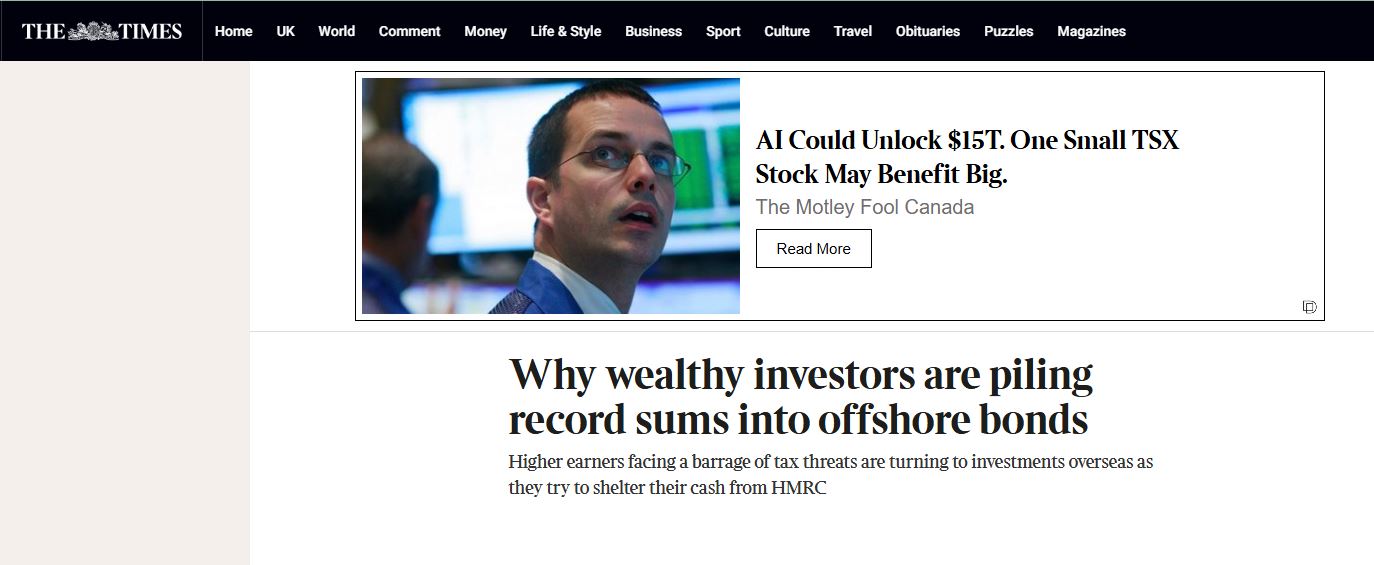
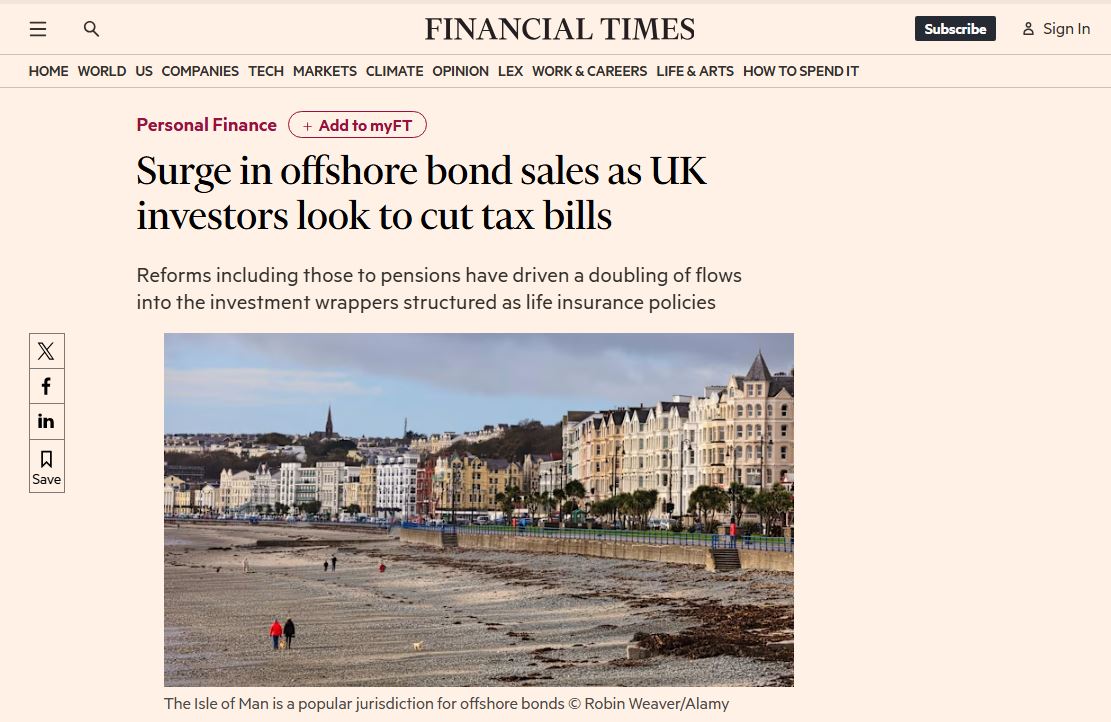
Editorial Articles & Commentary on Offshore Investment Bonds.
In-depth editorials on offshore investment bonds
- Change RL360 adviser, Expat Financial Planning, Expatriate Financial Planning for British Expats, Expert Advice, Financial Advice for British Expats f.
Want to Change Your RL360 Adviser or Get a Second Opinion?
If you hold an RL360 investment bond and are considering changing financial adviser, you’re not alone. Many RL360 policyholders originally established their bond years ago, often whilst living [...]
4.5 min read Offshore Investment Bonds: A Complete Guide to Tax-Efficient Wealth Structuring
The tax drag problem Most investors with substantial GIA portfolios are reporting and paying tax on dividends and capital gains annually, even when they have no intention of [...]
3.5 min read- Change Offshore Bond Adviser, Expatriate Financial Planning for British Expats, Expert Advice, Financial Advice for British Expats, offshore bonds, Utmost International f.
Thinking About Changing Your Utmost Adviser?
Thinking About Changing Your Utmost Adviser? If you hold an Utmost International investment bond and feel that your existing advice relationship is no longer meeting your expectations, it [...]
4.6 min read Offshore Bond UK Return: Save Tax Before Moving Back to the UK
What you need to know before becoming UK tax resident again If you're a British expat planning to return to the UK, now is the time to consider your [...]
4.3 min readOffshore Investment Bonds: How They Can Strengthen Your Family’s Wealth Planning
Offshore Bonds Are Back in the Spotlight A recent Financial Times article highlighted a surge in the use of offshore investment bonds — and for good reason. UK residents [...]
3 min readSelling Your UK Business / Professional Moving to Dubai? What You Need to Know
Moving to Dubai as a Business Owner or Professional? The Key Tax and Investment Considerations By Russell Hammond FPFS FCSI – Chartered Financial Planner | AES International UK & [...]
7.2 min read
This guide is for information purposes only and does not constitute personal financial advice or a recommendation. The value of investments can fall as well as rise, and tax treatment depends on individual circumstances and may change in future.

Russell Hammond
FPFS FCSI
Russell advises UK residents and internationally connected individuals on investment management, retirement planning, inheritance tax mitigation and long-term family wealth structuring.
His work focuses on helping clients coordinate wealth thoughtfully and tax efficiently across changing life stages, family priorities and international circumstances.
Russell is a Chartered Fellow of both the Personal Finance Society and the Chartered Institute for Securities & Investment, placing him amongst a small group of advisers to hold Fellowship status with both professional bodies.
With over 20 years’ experience in financial planning, his work today centres around helping successful individuals and families structure wealth for long-term financial security, retirement and intergenerational planning.

In partnership with AES International
Award-winning international financial advisory firm — providing institutional research, compliance support, and global reach behind Russell’s impartial advice.


What clients say.
Real situations, real outcomes. Here’s what us working together looks like. All reviews taken from, and independently verified at, review site Vouchedfor.co.uk
Initially, we were looking for advice around retirement planning and wanted to ensure our pensions and investments were structured appropriately for the future. Russell took over a poorly performing investment portfolio and successfully redirected the investments into more suitable solutions, resulting in significantly improved performance. He also helped identify the most appropriate arrangements for our various pensions and has continued to provide clear, regular reviews, explaining complex financial matters in a straightforward and understandable way. Russell's knowledge and expertise in financial planning are exceptional, and the outcomes achieved have exceeded our expectations.
5 Star Review, Verified Client
Monein, France
I initially sought financial advice when I wanted to better understand the options available to me regarding my final salary pension and determine the most suitable route for my own personal circumstances. Russell came highly recommended to me by a friend who had used him in similar circumstances, and from the outset I felt fully supported and well informed. He carefully explained all of the available options, carried out a thorough financial analysis, and helped me make a confident and informed decision without ever feeling pressured. Since then, I have continued to receive regular review meetings and ongoing support, keeping me updated on the progress of my financial arrangements. I am extremely happy with the outcome, in fact the results have exceeded my expectations, and I would make the same decision again without hesitation. The level of support and accessibility throughout has been excellent.
5 Star Review, Verified Client
Riyadh, Saudi Arabia now Cheshire
Having returned to the UK after many years as an expat, I was looking for an adviser who genuinely understood cross-border wealth and estate planning and could navigate multiple jurisdictions with confidence. Russell has helped me with investments, offshore bonds, tax planning, and broader wealth and estate structuring, always explaining complex matters in clear, easy-to-understand language. I have absolutely achieved the outcomes I was hoping for and have found Russell to be consistently accessible, highly knowledgeable, and exceptionally well qualified.
5 Star Review, Verified Client
Lanarkshire
Russell has taken great care to ensure I fully understand the nature of my pension fund investments and has consistently kept me informed of relevant developments. We have regular online meetings to review progress and discuss any changes, and on one occasion he contacted me directly to recommend an urgent adjustment to part of the investment strategy, a decision that was subsequently justified by market events. I have been very satisfied with the service provided throughout and would be more than happy to recommend him.
5 Star Review, Verified Client
Cologne, Germany now West Sussex
While living abroad, I was looking for advice on investing a fairly substantial sum of money with the aim of generating a stable and sustainable income for the future. Russell quickly understood both my objectives and my attitude towards risk, and provided clear, appropriate advice around how the portfolio should be structured to meet those goals. His explanations have always been straightforward, transparent and easy to understand, without ever overcomplicating matters. Russell’s original recommendations have helped me weather difficult periods relatively well, and I remain confident that his long-term approach will help me achieve my financial objectives over time. He has also always been highly responsive whenever I have had questions or concerns.
5 Star Review, Verified Client
Osaka, Japan
We initially looked for financial advice to help with our pension planning and broader investment strategy for retirement. Russell has provided excellent guidance throughout very different market conditions over the years. During periods that were understandably frustrating as investors, he remained calm, disciplined and consistent in his planning approach, and with hindsight he was absolutely right to do so. We have certainly achieved the outcome we were hoping for and have been extremely pleased with both the quality of the advice and the communication throughout.
5 Star Review, Verified Client
Caldas da Rainha, Portugal
I initially sought advice when transferring from a company final salary pension into a personal pension and wanted ongoing guidance to help manage my investments appropriately. Russell has provided an excellent service over many years, ensuring my portfolio remains well diversified while continuing to deliver strong long-term returns. Whenever I have needed advice or support, he has always been available, approachable and willing to help. I have absolutely seen the outcome I was hoping for and feel very confident trusting Russell to make the right recommendations for both me and my family. I genuinely cannot think of anything he could have done better.
5 Star Review, Verified Client
Norfolk
After relocating back to the UK following 16 years working in the Middle East, I was looking for advice around consolidating my savings and putting in place a suitable long-term financial strategy. Russell helped by designing an investment approach focused on sustainable, long-term growth that aligned with my objectives and attitude to risk. I have been pleased with the outcome and feel the strategy put in place has met my expectations. Naturally, investments are always subject to market fluctuations, but the level of risk was clearly explained and understood from the outset.
5 Star Review, Verified Client
East Sussex
After returning to the UK following many years overseas, we were looking for guidance to help simplify and organise what had become quite complex pension arrangements. Russell has been instrumental in helping us get our affairs in good order, taking the time to guide us through our pension strategy, long-term objectives and attitude to risk in a clear and reassuring way. Throughout the process, he has been professional, knowledgeable and approachable, and we have been extremely pleased with the outcome. Russell has become a trusted adviser to both my wife and me, and I honestly cannot think of anything he could have done better.
5 Star Review, Verified Client
Aberdeenshire, UK
Schedule Your Free Discovery Meeting with an experienced Chartered Financial Planner.
Your call with be with a UK qualified Chartered Financial Planner – no junior staff, no sales pitch.