Utmost International Offshore Bond: What to Know Before You Invest

Key takeaways
- Utmost offshore bonds can offer valuable tax-planning benefits. These include tax deferral, multi-currency investment options, flexible withdrawals and opportunities for estate and succession planning.
- The charging structure can make an enormous difference. Commission-based arrangements may include higher ongoing charges and early surrender penalties, whereas transparently priced, fee-based structures can be considerably more cost-effective.
- The 5% withdrawal allowance is tax-deferred, not tax-free. UK residents can ordinarily withdraw up to 5% of the original investment annually without triggering an immediate chargeable event gain, subject to the cumulative allowance and relevant tax rules.
- How the bond is established matters as much as the investments. Decisions concerning life assurance versus capital redemption, policy segmentation, ownership and lives assured can have significant long-term consequences.
- A second opinion can be extremely valuable. Before establishing or surrendering an Utmost bond, reviewing the total charges, exit penalties, tax implications and investment strategy can help avoid expensive mistakes.
Why You Shouldn’t Rush Into an Offshore Bond Without Reading the Fine Print
If you’re reading this, you’ve likely been recommended an offshore international investment bond — perhaps from Utmost International — as part of your financial planning or pension transfer advice.
Offshore bonds are legitimate tools for UK residents, expatriates and international investors. I’ve been using them successfully with my clients for more than 20 years.
Thus, they can offer real tax advantages, flexibility, and access to a wide range of global investments. But before you commit, it’s important to understand how these products are sold, and why not all advice is created equal.
First — the Good News: Offshore Bonds Can Offer Real Benefits
When used properly, offshore bonds like those from Utmost can provide:
-
Tax deferral: Investment growth rolls up without immediate tax liability.
-
Multi-currency flexibility: Ideal for those with global income or expenses.

-
Succession planning benefits: Useful for estate and trust planning.
-
Access to global investments: Including funds, ETFs, and discretionary portfolios.
-
Potential UK tax efficiency: Via 5% annual tax-deferred withdrawals.
These features are real, and in the right hands, they can be part of a smart cross-border financial plan.
But Here’s the Problem: The Way They’re Sometimes Sold
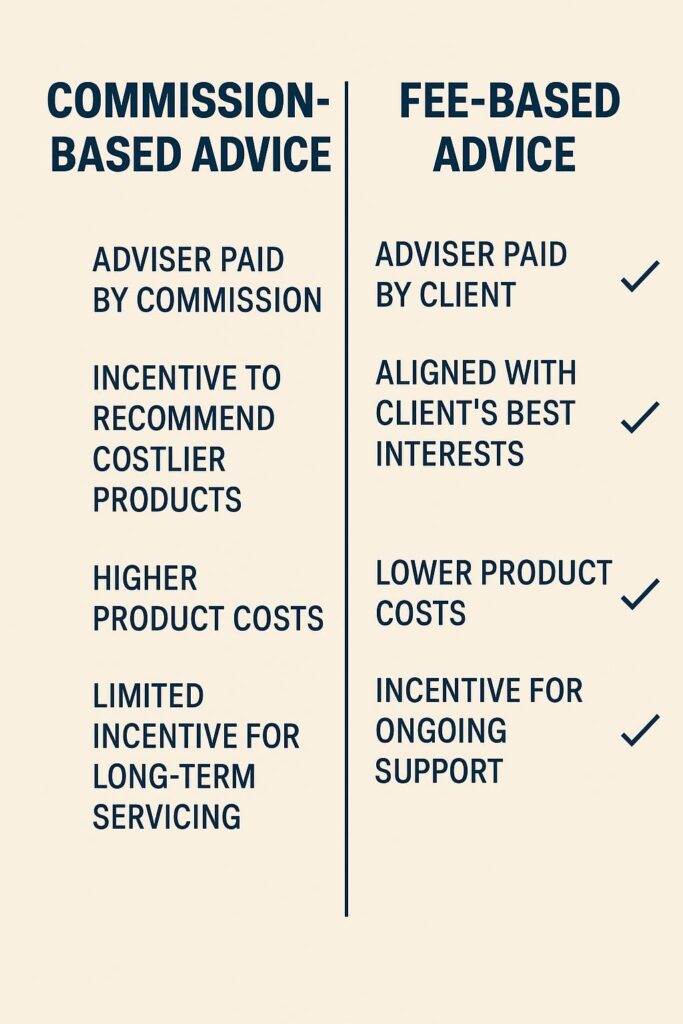
In some cases (outside of the UK), offshore bonds are sold on a commission basis. The adviser receives 5–7% upfront, plus annual trail commissions, all paid for by embedding extra charges into your product.
What does that mean for you?
-
High annual product costs
-
Early surrender penalties
-
Limited flexibility
-
Poor investment performance over time due to cost drag
And worst of all, this structure is rarely explained clearly. Many clients we speak to had no idea how much the adviser was being paid or how it would impact them long-term.
Even more concerning, once the product is set up, the adviser is often not incentivised to provide any meaningful ongoing support — they’ve already been paid upfront, and their job is done. This leaves many clients with a complex, high-cost product and no clear guidance for the years ahead.
So, should you choose an Utmost International Offshore Bond? Maybe, read on.

The Same Bond Can Be 90% Cheaper with Fee-Based Advice
Here’s what most people don’t realise:
The exact same offshore bond from Utmost can cost up to 90% less when accessed through a fee-only adviser — with no commissions, no lock-ins, and full cost transparency.
That’s right:
-
Same product
-
Same investment access
-
Radically lower cost
-
No built-in adviser commission
-
No surrender penalties or “lock-in” periods
This means more of your money stays invested, grows faster, and is available when you want it, not when the product allows.
Even more importantly, because fee-only advisers are paid for ongoing service — not upfront sales — you’re far more likely to receive proper, long-term support and proactive financial planning.
What Makes My Advice Different
At AES International, I provide impartial, fee-based advice and am fully UK-regulated.
That means:
-
I work only for you — not product providers
-
I charge transparent, pre-agreed fees — never hidden commissions
-
I tailor recommendations to your goals, not to a sales agenda
-
You benefit from professional standards backed by UK regulatory oversight
If I recommend an offshore bond, it’s because it genuinely adds value to your situation — and I’ll help structure it in the most cost-effective, transparent way available.
Getting Out Can Be Expensive — If You Get It Wrong
I often hear from clients who took out a commission-based Utmost bond years ago, only to find they’re now stuck with costly exit penalties, high charges, and inflexible structures that no longer suit them.
Avoiding this outcome is simple: get a second opinion before you commit.
Getting the Structure Right From Day One
The cost of an offshore bond is important, but so is how the bond is actually established.
An Utmost bond can be configured in a number of different ways, and decisions made at outset can have consequences many years later, particularly where the bond is intended to form part of longer-term family or estate planning.
Depending on your circumstances, consideration should be given to:
- Life assurance or capital redemption – whether the bond should ultimately terminate by reference to the death of a life assured, or continue independently of anyone’s lifetime.
- Who should be a life assured – where the life assurance basis is selected, the choice and number of lives assured can materially affect how long the bond can continue.
- The number of policy segments – sufficient segmentation can provide valuable flexibility for future withdrawals, assignments and intergenerational planning.
- Ownership – whether the bond should be held individually, jointly, by trustees or potentially assigned to others later.
- Trust and estate planning – consideration should be given at outset to whether the bond may ultimately form part of a wider gifting, succession or trust strategy.
- Currency and investment structure – the appropriate bond currency, underlying investments and investment management arrangements should reflect the investor’s wider circumstances.
These can look like relatively small administrative choices when the bond is established. In reality, they can determine how flexible the arrangement remains decades into the future.
A well-structured offshore bond should therefore be designed not simply around where you are today, but around how your wealth may need to be held, accessed and ultimately passed on in the future.
Summary
Offshore bonds can be an extremely useful part of a successful financial plan, but only when:
- They are structured correctly from the outset, with your current and future circumstances in mind
- The charging model works for you, not against you
- The underlying investment strategy is appropriate
- And the advice you receive is genuinely impartial and ongoing
Before committing to a structure that may remain in place for decades, ask:
Is this genuinely the best structure for me, or simply the easiest and most profitable one for my adviser to recommend?
Contact Me Today for a Second Opinion
I specialise in reviewing offshore bond recommendations — including from Utmost International — and helping UK residents and expats make fully informed, cost-effective decisions.
Ready to make the most of your finances?
Book a free 30-minute consultation via Microsoft Teams at a time that suits you. Let’s explore how we can optimise your investments, pensions, or retirement plans.
Schedule your free, no obligation 30 minute Teams call now
✔ UK-regulated advice
✔ Fee-only, client-first model
✔ Ongoing support, no hidden commissions, no lock-ins
Interested in my view on RL360 bonds? Read that article here
Frequently Asked Questions
Is an Utmost International offshore bond a good investment?
An Utmost International offshore bond can be an appropriate investment structure for UK residents and internationally mobile individuals seeking tax deferral, investment flexibility and estate planning opportunities. However, its suitability depends on your circumstances, investment objectives, tax position and the overall charging structure. The bond itself is a tax and investment wrapper rather than a guarantee of investment performance.
What charges apply to an Utmost offshore bond?
Utmost offshore bond charges depend on the product and charging structure selected. They may include policy administration fees, investment charges, adviser fees and, in some arrangements, charges associated with an upfront commission. The total annual cost and any early surrender penalties should be clearly established before investing.
Can I establish an Utmost offshore bond without paying adviser commission?
Yes. Certain Utmost offshore bond arrangements can be established using a fee-based charging structure without an initial adviser commission being funded through the bond. This can significantly reduce costs and avoid the surrender penalties associated with some commission-based structures. The precise terms depend on the product and charging option selected.
Can I withdraw 5% annually from my Utmost offshore bond tax-free?
The annual 5% withdrawal allowance is tax-deferred rather than tax-free. UK policyholders can generally withdraw up to 5% of their original investment each policy year without an immediate chargeable event gain, with unused allowances carried forward, normally up to a cumulative maximum of 100% of premiums paid. Deferred gains may become taxable when the bond is subsequently surrendered or another chargeable event occurs.
Can I surrender my Utmost offshore bond without penalties?
This depends on the bond's original charging structure. Some commission-based arrangements include early surrender penalties, whereas other fee-based structures may have no contractual early surrender charge. Surrendering the bond can also create a chargeable event gain and a UK income tax liability, so both the product charges and tax implications should be assessed before proceeding.
Is it better to establish an Utmost bond on a life assurance or capital redemption basis?
Both structures can offer similar investment and tax-deferral benefits, but their duration and succession planning characteristics differ. A life assurance bond ordinarily terminates on the death of the final life assured, whereas a capital redemption bond can continue for its contractual term independently of anyone's lifetime. The appropriate structure depends on the intended ownership, estate planning objectives and how the investment may be passed to future generations.
Why does policy segmentation matter with an offshore bond?
An offshore bond can be established as a collection of individual policies or segments. Having sufficient segments can provide greater flexibility when making withdrawals, surrendering policies or assigning benefits to family members. The choice between partial withdrawals across all segments and surrendering whole segments can also produce materially different UK income tax outcomes.
Can I change financial adviser without surrendering my Utmost bond?
Yes. It is ordinarily possible to appoint a new financial adviser to an existing Utmost offshore bond without surrendering the investment. However, changing adviser does not automatically remove existing product charges or surrender penalties. A review can establish whether the existing arrangement should be retained, restructured where permitted, or replaced.
Continue reading
Moving Back to the UK with a QROPS? Your Complete Guide
Returning to the UK after living overseas can raise a number of important financial planning questions, particularly if you hold pension benefits within a Qualifying Recognised Overseas Pension Scheme [...]
Thinking About Changing Your Utmost Adviser?
Thinking About Changing Your Utmost Adviser? If you hold an Utmost International investment bond and feel that your existing advice relationship is no longer meeting your expectations, it [...]
Offshore Investment Bonds: How They Can Strengthen Your Family’s Wealth Planning
Offshore Bonds Are Back in the Spotlight A recent Financial Times article highlighted a surge in the use of offshore investment bonds — and for good reason. UK residents [...]